Menu
close
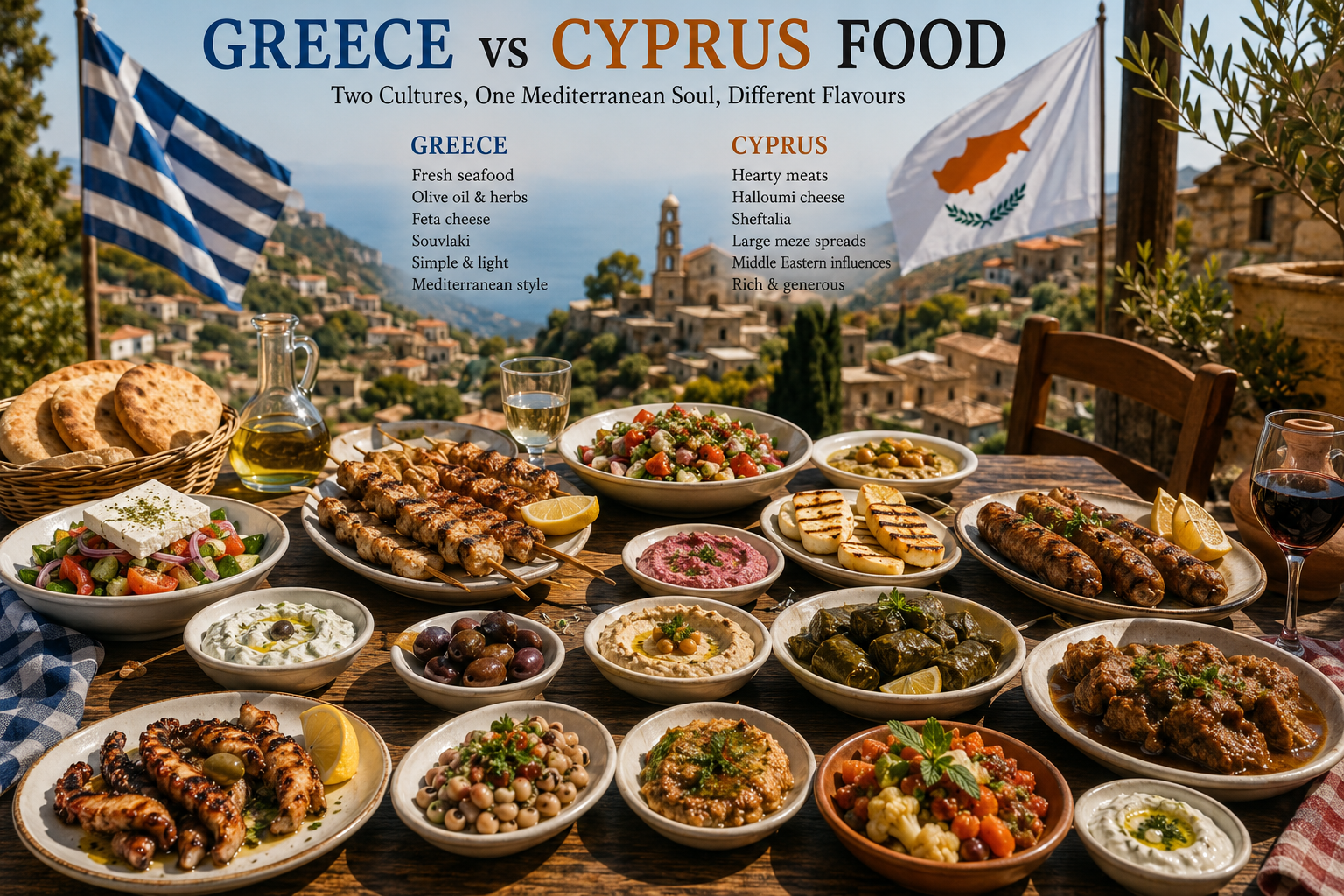
At first glance, Greek food and Cypriot food appear almost identical. Both cuisines are built around olive oil, grilled meats, fresh vegetables, seafood and long meals shared with family and friends. Yet spend enough time eating in taverns across both countries and the differences quickly become obvious. From the way meze is served to the words used for dishes, from plate smashing to village cooking traditions, Cyprus and Greece have developed two distinct food cultures from the same Mediterranean roots.
For visitors researching Greek food vs Cypriot food, Cyprus cuisine, traditional taverns in Cyprus, Greek taverns, or simply wondering whether food in Cyprus is the same as food in Greece, the answer is surprisingly complex.
The two cuisines share the same foundation.
But they evolved in very different directions.
No.
And this is probably the biggest misconception visitors have when arriving in Cyprus.
Many tourists land in Larnaca or Paphos expecting the food to be identical to what they ate in Athens, Crete, Rhodes or Santorini.
The reality is very different.
Cypriot food feels heavier.
More generous.
More influenced by the Middle East.
More focused on meat.
More focused on sharing.
And significantly more tied to village traditions.
The easiest way to explain it is this:
Greek food feels Mediterranean.
Cypriot food feels Mediterranean with one foot firmly planted in the Levant.
That subtle difference changes almost everything.
The first thing most visitors notice isn't actually the food itself.
It's the way the food is served.
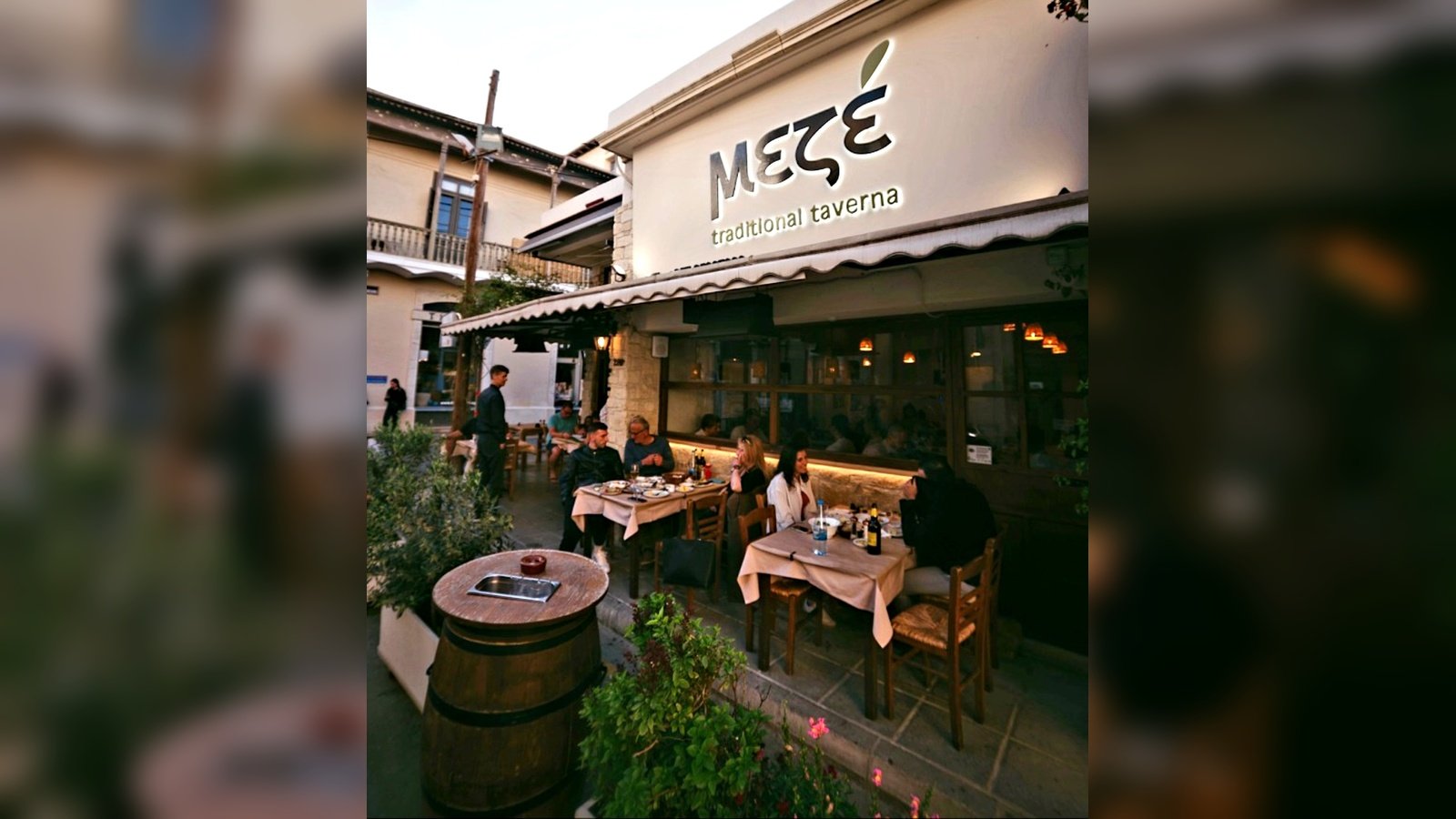
Walk into a traditional taverna in Greece and the experience is usually straightforward.
You order.
You share.
You drink wine.
You enjoy yourself.
A table may order:
The meal feels flexible.
You decide what you want.
The kitchen brings it.
Simple.
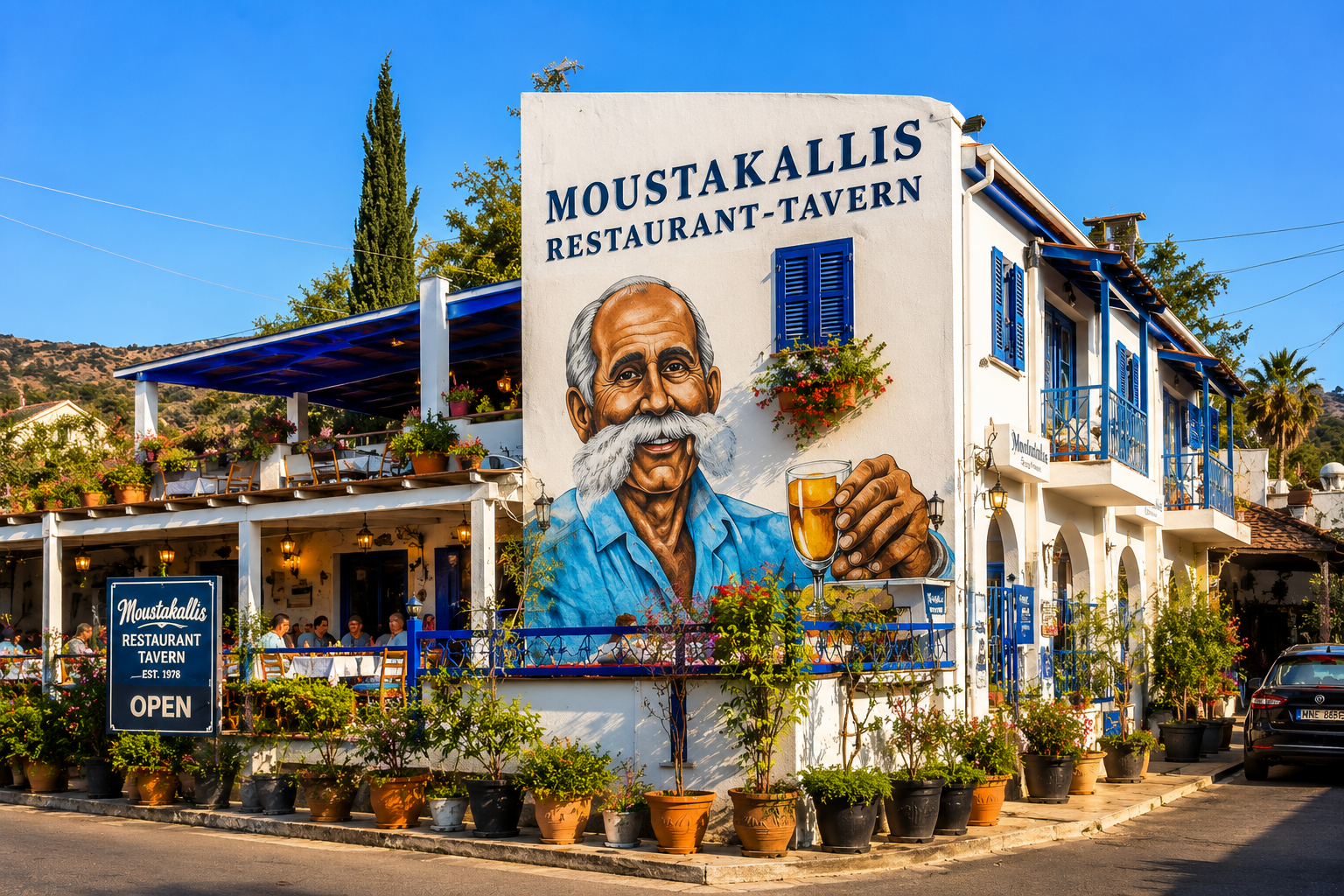
Now walk into a traditional tavern in Cyprus.
The conversation is often very different.
The waiter may simply ask:
"Meze?"
And that's it.
The meal begins.
Then dishes start arriving.
And arriving.
And arriving.
And arriving.
Twenty dishes later, you realise you're only halfway through.
A traditional Cypriot meze is less a meal and more an endurance event.
Visitors regularly underestimate the size of a proper Cypriot meze.
Some include:
The philosophy is different.
In Greece, you choose the meal.
In Cyprus, the meal chooses you.
Part of this comes from hospitality.
Part comes from village culture.
Part comes from history.
Cypriots have traditionally associated generosity with abundance.
A host should never risk a guest leaving hungry.
This mentality still exists today.
In fact, one criticism occasionally made of Cypriot taverns is that portions have become almost too generous.
Food waste can be substantial.
Many visitors simply cannot finish what arrives.
Yet for many Cypriots, reducing the volume would almost feel rude.
The excess is part of the hospitality.
Both countries enjoy meat.
But Cyprus takes it to another level.
If you compare traditional taverns in Cyprus and Greece, one thing becomes immediately obvious.
Cyprus is far more meat-focused.
Common meats include:
Seafood often shares equal importance.
Meat frequently dominates the table.
Particularly:
The average Cypriot tavern often serves significantly more meat than an equivalent Greek taverna.
Many visitors are surprised by just how central pork remains to traditional Cypriot cooking.
One of the clearest examples is sheftalia.
If halloumi is Cyprus' most famous cheese, sheftalia may be its most iconic meat dish.
Made from minced pork and lamb wrapped in caul fat, sheftalia is found everywhere in Cyprus.
You can order it:
While similar dishes exist elsewhere, sheftalia is unmistakably Cypriot.
Many Greeks discover it properly only after visiting Cyprus.
No food comparison would be complete without discussing cheese.
Perhaps the most famous cheese in the Mediterranean.
Perhaps the most recognisable grilling cheese in the world.
Interestingly, they represent two very different approaches.
Feta is soft.
Salty.
Crumbly.
Usually supporting other dishes.
Halloumi is often the main event.
Grilled.
Fried.
Barbecued.
Stuffed into sandwiches.
Added to salads.
Served for breakfast.
Few ingredients define a national cuisine as strongly as halloumi defines Cyprus.
This may be controversial.
But if we're discussing seafood alone, Greece generally has the advantage.
The Greek islands possess centuries of fishing traditions and access to an enormous coastline.
Seafood often feels more central to Greek food culture.
Visitors travelling through:
Will often encounter extraordinary seafood cooked with remarkable simplicity.
Cyprus certainly has excellent seafood restaurants.
But traditional Cypriot food remains more focused on meat than fish.
This is where Cypriot cuisine becomes truly unique.
Geographically, Cyprus sits much closer to:
Than it does to Athens.
You can taste that reality in the food.
Used extensively throughout Cyprus.
Far more common than in many parts of Greece.
A staple ingredient.
Particularly in dips and sauces.
Perhaps the biggest surprise for visitors.
Cypriots regularly use cinnamon in savoury dishes.
Greeks use it too.
But nowhere near as extensively.
Afelia, one of Cyprus' most famous dishes, combines pork, coriander and red wine in a flavour profile that feels noticeably different from mainland Greek cooking.
Both countries love bread.
But even here differences emerge.
Cypriot village bread tends to be:
Traditional Cypriot bakeries often produce breads that reflect Levantine influences more than mainland Greek traditions.
Many visitors immediately notice the texture difference.
One of the most fascinating differences appears in the words themselves.
A Greek and a Cypriot may order the same thing using different names.
In Greece:
Dolmades.
In Cyprus:
Koupepia.
Both are vine leaves stuffed with rice and filling.
The dish is essentially the same.
The word changes.
Both countries serve almost identical coffee.
Yet locals often refer to it differently depending on context.
Even this famous dish differs.
Order souvlaki in Greece and you'll often receive skewered meat.
Order souvlaki in Cyprus and the preparation, cut and presentation frequently change.
The same word.
Different expectation.
Perhaps no food stereotype is more famous than plate smashing.
Visitors arrive expecting restaurants across Greece filled with broken plates.
The truth?
It rarely happens today.
Plate smashing largely disappeared due to:
In modern Greece it is uncommon.
Tourist venues occasionally stage it.
But it is far from everyday life.
Because Cyprus often preserves traditions longer.
Older generations still remember occasions where plate smashing appeared at weddings and celebrations.
Today you'll occasionally encounter symbolic versions at private events.
However, like Greece, it is no longer a normal part of dining culture.
The myth remains far larger than the reality.
Where food exists, dancing follows.
But even here Cyprus and Greece diverge.
Strong traditions include:
Many dances overlap.
Yet village celebrations often have their own local styles and rhythms.
Cypriot weddings frequently continue much later into the night and place enormous emphasis on communal participation.
Food, music and dance feel inseparable.
If there's one area where Cyprus arguably surpasses Greece, it may be village food culture.
Drive through villages such as:
And you'll find recipes passed down through generations.
Many remain largely unchanged.
Traditional taverns in Cyprus often feel less commercial than their equivalents in heavily touristed parts of Greece.
The food can feel deeply personal.
Family recipes still dominate.
Grandmothers still influence menus.
This authenticity remains one of Cyprus' greatest strengths.
Most visitors automatically associate wine with Greece.
Yet Cyprus possesses one of the oldest wine traditions in the world.
Commandaria, produced in Cyprus, is often described as the oldest named wine still in production.
Cypriot village wines also remain central to tavern culture.
A proper tavern meal in Cyprus often feels incomplete without local wine.
This is one area where Cyprus deserves far more international recognition.
After spending time in both countries, many travellers notice something interesting.
Greek tavernas often deliver exceptional food.
Cypriot taverns often deliver exceptional hospitality.
The difference is subtle but important.
In Cyprus, you're often treated like a guest.
In Greece, you're often treated like a customer.
Obviously there are exceptions.
But the distinction appears frequently enough to be noticeable.
The meal becomes more than food.
It becomes an event.
A conversation.
An afternoon.
A celebration.
Greek food and Cypriot food are deeply connected.
They share ingredients.
They share techniques.
They share centuries of history.
Yet they are not the same cuisine.
Greek food often celebrates simplicity.
Cypriot food celebrates abundance.
Greek tavernas often focus on choice.
Cypriot taverns focus on generosity.
Greek cuisine leans heavily toward the Mediterranean.
Cypriot cuisine sits between the Mediterranean and the Middle East.
Neither is better.
They're simply different.
And that's exactly what makes exploring both so rewarding.
For food lovers visiting Cyprus, understanding these differences transforms the experience. What initially appears familiar soon reveals itself to be something entirely unique: a cuisine shaped by Greece, influenced by the Levant, and proudly Cypriot in its own right.